After Hours Answering Service: Costs, Benefits & Setup
Learn how an after hours answering service handles bookings, urgent calls, nights, and weekends—plus costs, features, setup steps, and a buyer checklist.
TL;DR
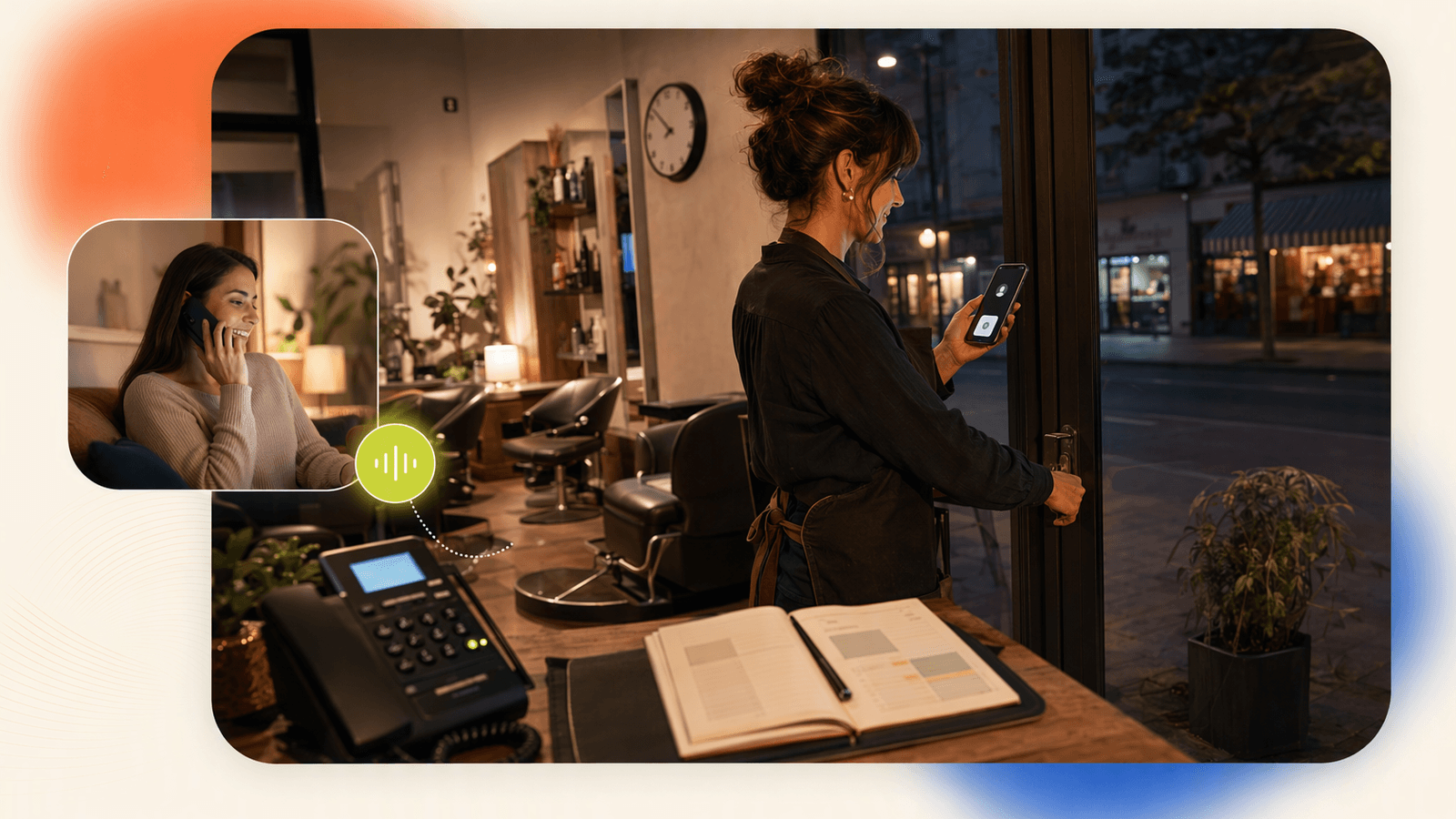
An after hours answering service picks up calls when your staff is unavailable, including evenings, weekends, holidays, and busy periods. It can answer questions, capture leads, book appointments, and route urgent matters using predefined rules.
Appointment-based businesses should prioritize:
- Coverage during missed-call windows
- Real-time calendar access
- Clear urgent-call escalation
- Natural conversations
- Transparent pricing
- Call summaries and easy script updates
An AI receptionist can cost less than employing another receptionist, but a human should remain responsible for emergencies, sensitive complaints, clinical advice, and unusual requests.
What Is an After-Hours Answering Service?
An after hours answering service provides small business phone coverage outside normal operating hours. Calls may be handled by live receptionists, an AI phone receptionist, or both.
Unlike voicemail, the service responds during the call. It may:
- Explain services, prices, policies, and hours
- Schedule, reschedule, or cancel appointments
- Collect contact and service details
- Route urgent calls to an on-call employee
- Send staff a call summary
“After hours” does not have to mean overnight. A hairstylist may need coverage while working with a client, while a pet groomer may need help during early-morning drop-offs. Some providers also offer 24/7 business call answering.
How After-Hours Call Answering Works
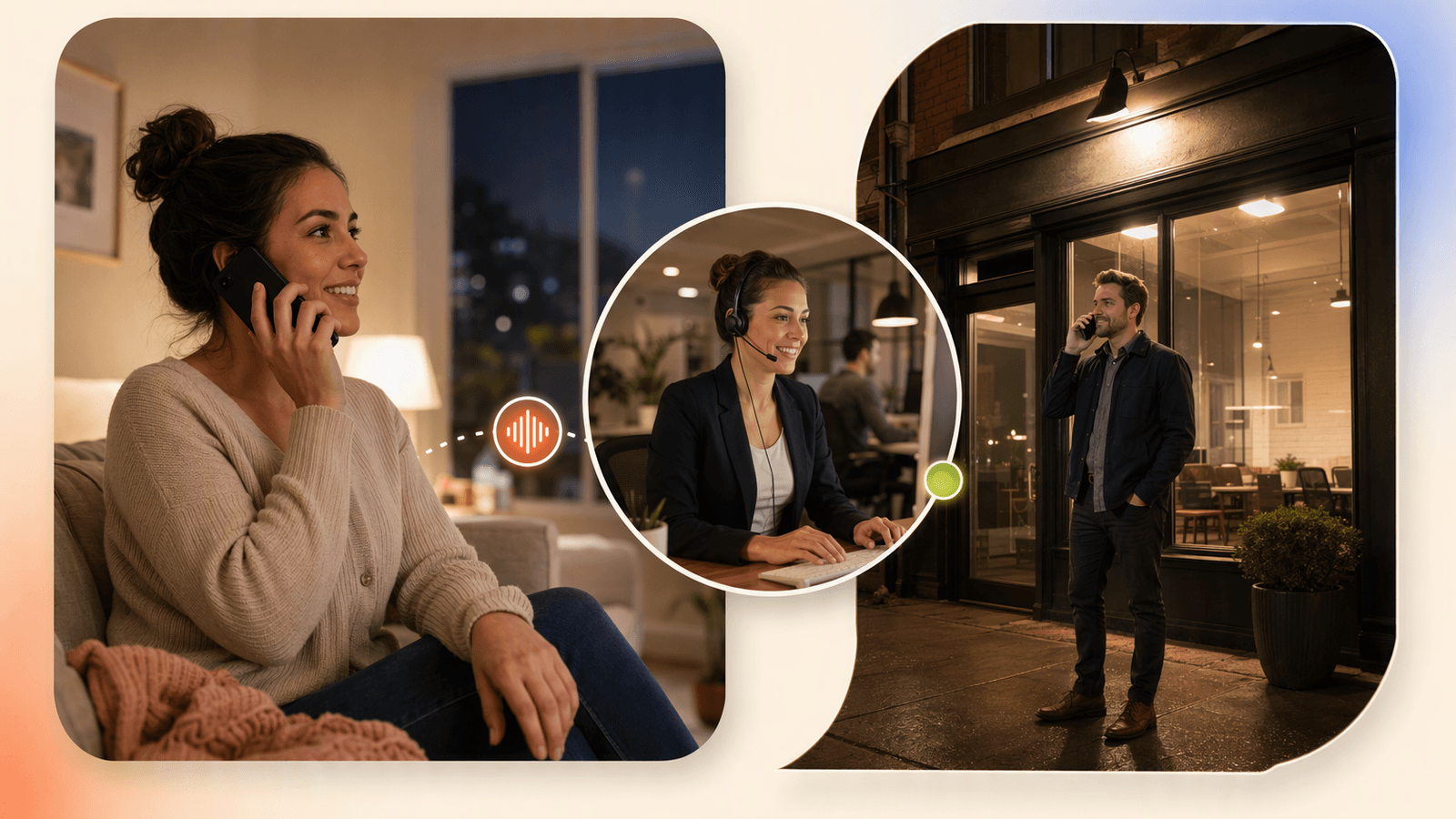
A typical call follows this workflow:
- The call is forwarded. Your number sends unanswered calls—or all calls during selected hours—to the service.
- The caller receives a branded greeting. The receptionist uses your business name and approved wording.
- The request is identified. The service determines whether the caller needs an appointment, information, or urgent help.
- The next action is completed. It books a time, records a message, answers an approved FAQ, or follows an escalation rule.
- Your team receives a summary. Notifications can include the caller’s details, booking status, and required follow-up.
Test forwarding before launch. The Federal Communications Commission’s consumer guidance explains common telephone services, but your carrier supplies exact instructions.
Which Businesses Need Out-of-Hours Phone Coverage?
Coverage is most useful when a call can directly create—or save—an appointment.
| Business | Common missed-call window | Likely caller need |
|---|---|---|
| Hair or nail salon | During services and evenings | Price question or booking |
| Spa or massage studio | Treatment sessions | Availability or rescheduling |
| Pet groomer | Drop-off periods and weekends | Grooming appointment |
| Veterinary clinic | Nights and holidays | Triage and on-call routing |
| Gym or yoga studio | Early mornings and evenings | Class, membership, or trial |
| Therapy or wellness practice | During sessions | New-client inquiry |
| Home service provider | Jobs and travel time | Estimate or urgent dispatch |
Businesses receiving few phone bookings may not need continuous coverage. Review two to four weeks of call logs to identify when unanswered calls occur.
Explore examples for salons, pet services, and fitness and wellness studios.
Key Benefits of Answering Calls Outside Business Hours
More opportunities to book
A caller seeking tomorrow’s appointment may contact another provider rather than wait for a callback. Immediate availability checks reduce that delay.
Fewer interruptions
Staff can finish a service or customer handoff without stopping to answer the phone.
Consistent weekend answering solutions
The same approved hours, cancellation policy, and service information apply on nights, weekends, and holidays.
Better control over urgent calls
Emergency call routing rules distinguish routine requests from issues requiring an on-call employee. A provider must not replace emergency services. The FCC explains 911 calling and emergency communications in the United States.
Essential Features to Look For
- Custom greetings
- Scheduled, overflow, and overnight handling
- Real-time appointment booking
- Google Calendar, Mindbody, or Square compatibility
- Required language support
- Call summaries and staff notifications
- Urgency- and time-based transfer rules
- Easy policy and holiday-hour updates
- Transparent allowances and overage charges
- A process for correcting inaccurate information
For booking-heavy businesses, review receptionist and calendar capabilities before considering less important extras.
Live Receptionists vs Automated Call Handling
| Consideration | Live receptionist | AI phone receptionist |
|---|---|---|
| Availability | Depends on staffing plan | Can provide continuous coverage |
| Conversation | Strong for unusual or emotional situations | Strong for repeatable bookings and FAQs |
| Pricing model | Commonly per minute or plan tier | Commonly subscription plus usage |
| Consistency | May vary by receptionist | Uses approved business rules |
| Escalation | Human judgment | Follows defined routing rules |
| Best fit | Sensitive, complex calls | Routine inquiries and bookings |
The right choice depends on complexity. A veterinary clinic may use AI for appointment requests but transfer possible emergencies to an on-call professional. A salon may automate most bookings.
Common Use Cases and Call-Handling Scenarios
Salon, 8:20 p.m.: A caller requests a Saturday color appointment. The receptionist checks the calendar, offers approved times, and books the visit.
Pet groomer, Sunday morning: The service collects a dog’s breed, size, requested treatment, and preferred dates. If staff must confirm pricing, it creates a follow-up instead of guessing.
Fitness studio, 6:10 a.m.: A member asks whether a class is running. The receptionist provides the approved schedule and records a cancellation.
Veterinary clinic, midnight: A caller reports a potentially urgent symptom. The service follows escalation instructions without giving medical advice. Healthcare organizations should review HHS guidance on HIPAA business associates.
How Much Does an Answering Service Cost?

Common pricing models include:
- Monthly subscription with a call allowance
- Per-call billing
- Per-minute billing
- Base fee plus overage charges
Compare total cost using expected call volume. Ask whether transfers, spam calls, setup, holidays, bilingual coverage, and long calls cost extra.
DeskBuddy offers a seven-day free trial with 20 calls. Its Standard plan starts at $39.90 per month for 100 calls and one location; the Professional plan is $99.90 per month for 300 calls and up to five locations. Overage rates apply, and pricing may change, so check current DeskBuddy plans and allowances.
When comparing this with hiring, include wages, payroll costs, recruiting, training, and coverage gaps. The U.S. Bureau of Labor Statistics receptionist wage data provides a useful benchmark.
How to Choose the Right Provider
Ask providers to demonstrate your real call scenarios.
- Can it book into your current calendar?
- What happens when availability changes during a call?
- Can you limit which services may be booked?
- How are urgent calls transferred?
- What if the on-call employee does not answer?
- Can you review summaries and update information?
- Are there contracts, setup fees, or minimums?
- Which languages are supported?
- How are sensitive details protected?
- Can you test before signing a contract?
How to Set Up Scripts, Routing Rules, and Escalations
Create a one-page call guide covering four areas.
Greeting: “Thanks for calling Northside Pet Grooming. How can I help?”
Approved information: Hours, location, services, starting prices, preparation instructions, and cancellation policy.
Booking rules: Service duration, eligible staff, lead time, buffers, and required details.
Escalation levels:
- Routine: answer or book
- Follow-up required: record details
- Urgent: transfer to the designated employee
- Immediate danger: direct the caller to emergency services
Define a fallback if nobody accepts a transfer.
Best Practices for Delivering a Consistent Customer Experience
- Review call summaries weekly during the first month.
- Update holiday hours promptly.
- Keep answers conversational.
- Never invent a price, policy, or clinical answer.
- Test services and schedules before promoting them.
- Tell employees who receives urgent transfers.
- Track bookings, follow-ups, and incorrect escalations.
- Re-test after calendar or forwarding changes.
How DeskBuddy Helps Businesses Manage Calls Beyond Office Hours
DeskBuddy is an AI phone receptionist for appointment-based small businesses. It answers calls around the clock, handles approved questions, and helps callers book through connected Google Calendar, Mindbody, or Square workflows.
It supports conversations in English, Spanish, and Chinese, while complex situations can be transferred to your team. Setup is designed for solo providers and multi-location managers.
You can see how DeskBuddy handles appointment calls or start a no-credit-card trial.
Never miss another customer call.
Get started freeKeep reading
Virtual Medical Receptionist Guide for Small Clinics
Learn how a virtual medical receptionist covers appointment calls, after-hours questions, messages, and handoffs. See the checklist.
Virtual Receptionist Guide for Service Businesses 2026
Compare virtual receptionist costs, features, and options for service businesses. See when AI call answering fits and try DeskBuddy.
Medical Office Virtual Receptionist: Fewer Missed Calls
See how a medical office virtual receptionist reduces missed calls, books visits, routes urgent issues, and controls staffing costs. Start with DeskBuddy.